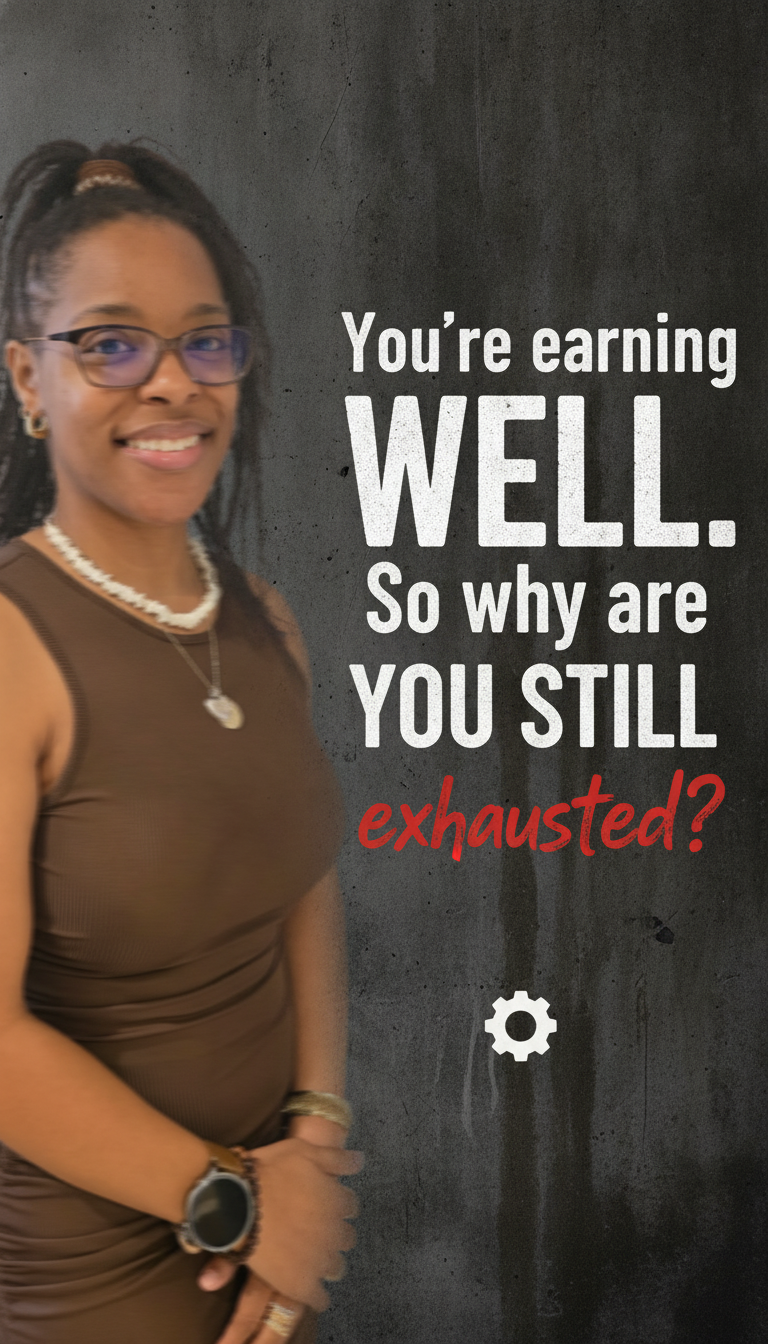
You've done everything right. You've climbed the ladder, negotiated raises, maxed out your 401(k) contributions. Your savings account has a comma in it, maybe even two. From the outside, you look successful. But here's the uncomfortable question: if you walked away from your job tomorrow, how long until you'd need to change your life?
If the honest answer is measured in weeks rather than years, you haven't built wealth. You've built a very nice prison with slightly better amenities.
Why Your Savings Don't Buy Freedom
The distinction between savings and wealth isn't semantic wordplay. It's the difference between a cushion and a foundation. Savings soften the blow when you stumble. Wealth means you don't have to get back up and keep running unless you choose to.
Consider the professional earning $200,000 annually with $75,000 in savings. Impressive numbers. But if their monthly expenses sit at $12,000, they have exactly six months of runway. Six months before the lifestyle downgrades begin. Before the private school conversations happen. Before "maybe we should sell the house" enters the vocabulary.
That's not financial security. That's a very expensive treadmill with a nice view.
The trap is particularly insidious for high earners. A growing account balance creates the illusion of progress. The number gets bigger, so you must be winning. But if your lifestyle grows in lockstep with your income—or worse, slightly ahead of it—you're not building freedom. You're building a more elaborate cage.
The Dependency Test
Real wealth shows itself in your level of dependency on your next paycheck. The wealthy person earning $80,000 with ten years of expenses secured has more freedom than the person earning $500,000 who couldn't survive ninety days without that direct deposit.
This isn't about income level. It's about the space between what you have and what you need. That space is where freedom lives. Where you can turn down the toxic client, take the sabbatical, start the business, or simply choose work that fulfills you rather than work that pays you.
Most people never create that space. They optimize for the wrong metric—account balance rather than autonomy. They confuse a rising net worth with rising freedom, not realizing they're still completely dependent on circumstances beyond their control. One industry downturn, one health crisis, one company restructuring, and the facade crumbles.
Building Actual Wealth
Wealth isn't a number. It's a ratio. It's the relationship between your resources and your requirements. Between what you've built and what you need to maintain the life you want.
This is why a comprehensive life and wealth audit matters more than tracking your account balance. You need to understand your actual burn rate, your genuine fixed obligations, and how long your assets could sustain you without earned income. Not in a catastrophe survival scenario, but in your actual life.
The math is straightforward. Calculate your true monthly expenses—not the sanitized version you tell yourself, but the real number including the lifestyle elements you're not willing to compromise. Multiply by twelve for one year, by sixty for five years. That's your freedom number at different time horizons. Now compare it to your liquid, accessible wealth. Not your retirement accounts you can't touch for twenty years. Not your home equity that requires selling your house. Your actual available resources.
The gap between those numbers is your dependency gap. It's the measure of how trapped you are, regardless of how successful you appear.
Most professionals discover their dependency gap is much wider than they imagined. The realization is uncomfortable. It's also necessary. You can't build freedom if you don't know you're trapped.
The Invitation
Understanding where you actually stand requires more than looking at account balances. It requires honest assessment of the relationship between your resources, your obligations, and your freedom. Our free Life and Wealth Audit provides that clarity—no sales pitch, no signup required, just an objective measure of the gap between savings and actual wealth. Three minutes for a perspective that most people spend decades avoiding.