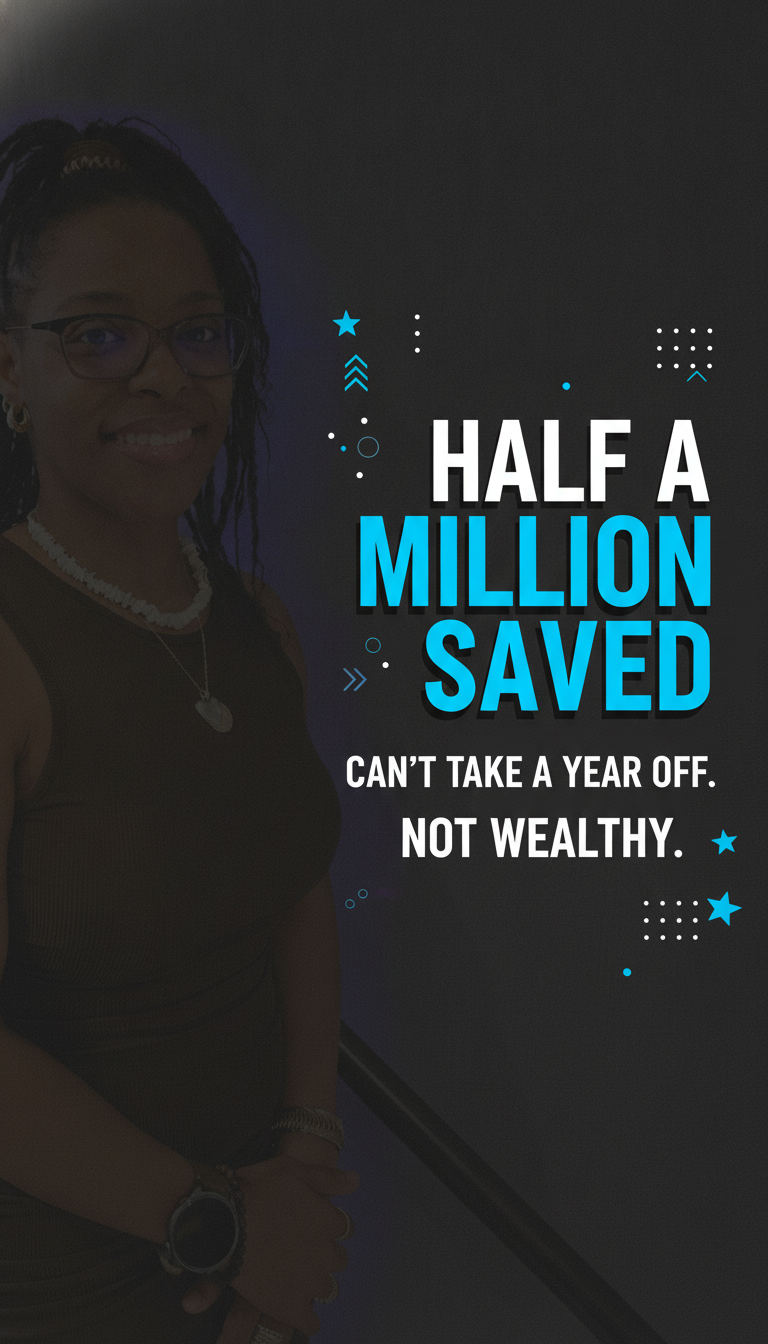
You're making good money. Your income has climbed steadily. You've got the title, the lifestyle, the trappings. But here's the uncomfortable question: are you actually building wealth, or are you running faster on an increasingly expensive treadmill?
Most financially successful people track the obvious numbers—income, expenses, maybe savings rate. These matter, certainly. But they miss the deeper story. They don't reveal whether your financial life is genuinely compounding or simply cycling. The difference between these two states is what separates people who eventually achieve financial independence from those who remain permanently tethered to their paycheck, regardless of how large it grows.
Beyond Income: Understanding Wealth Velocity
The concept of wealth velocity answers a simple question: how quickly is your net worth actually growing relative to the effort and time you're investing? It's the difference between motion and progress. You can be incredibly busy, extraordinarily well-compensated, and still find yourself in essentially the same financial position year after year once you account for lifestyle inflation and the rising cost of maintaining your status.
Wealth velocity requires looking at three interconnected metrics that, together, reveal the truth about your financial trajectory. Each one matters, but it's the pattern across all three that exposes whether you're building a foundation or constructing an elaborate facade.
The Three Numbers That Tell the Truth
First, calculate your net worth growth rate over the past twelve months. Not your income growth—your net worth growth. Take your current net worth, subtract what it was exactly one year ago, and divide by last year's figure. This percentage is your actual wealth accumulation rate. For most high earners, this number is surprisingly small, often single digits, sometimes even negative despite six or seven-figure incomes. Why? Because income alone doesn't build wealth. Income minus spending, invested wisely over time, builds wealth.
Second, examine your wealth created per hour worked. Divide your net worth growth over the past year by the total hours you worked to generate it. This reveals your true hourly wealth creation rate, and it's usually sobering. You might bill at $500 per hour, but if you worked 2,400 hours last year and your net worth grew by $120,000, you actually created $50 per hour of lasting wealth. The rest evaporated into consumption. This metric exposes the hidden cost of high-earning, high-spending lifestyles.
Third, calculate passive income as a percentage of your total income. This is money that arrives whether you work or not—dividends, rental income, royalties, business profits that don't require your daily presence. For most professionals, this number sits near zero for decades. They've built an income stream entirely dependent on their continued labor. Real wealth, the kind that eventually purchases freedom, shows rising passive income ratios. When this number approaches 100%, you've achieved functional financial independence.
What Moving Numbers Actually Look Like
Here's what matters: these three numbers should be moving upward together over time. Your net worth growth rate should accelerate as investments compound. Your wealth per hour worked should increase as you build systems and assets. Your passive income percentage should climb steadily from near-zero toward meaningful.
If only your income is rising while these three metrics stay flat, you've built a job, not wealth. An expensive job, perhaps. A prestigious one. But still a job—something that stops producing the moment you stop working. This is the uncomfortable reality for many high-earning professionals. They've optimized for income without building wealth velocity.
The fix isn't necessarily earning more. Often it's redirecting what you already earn, questioning automatic lifestyle inflation, and deliberately building assets that compound without consuming your time. It's choosing investments and business structures that shift the ratio between active and passive income. It's measuring what actually matters instead of what's easy to see.
Most people never run these numbers. They rely on vague feelings of progress, on income growth as a proxy for wealth building, on the assumption that doing well means building wealth. But assumptions aren't data. If you're serious about understanding where you actually stand—not where you hope you stand or where it feels like you stand—you need an honest audit of these metrics. Palymorf's free Life and Wealth Audit walks you through exactly this analysis, showing you precisely where your wealth velocity stands and which specific variables to address next. Because you can't optimize what you don't measure, and most people are measuring the wrong things entirely.