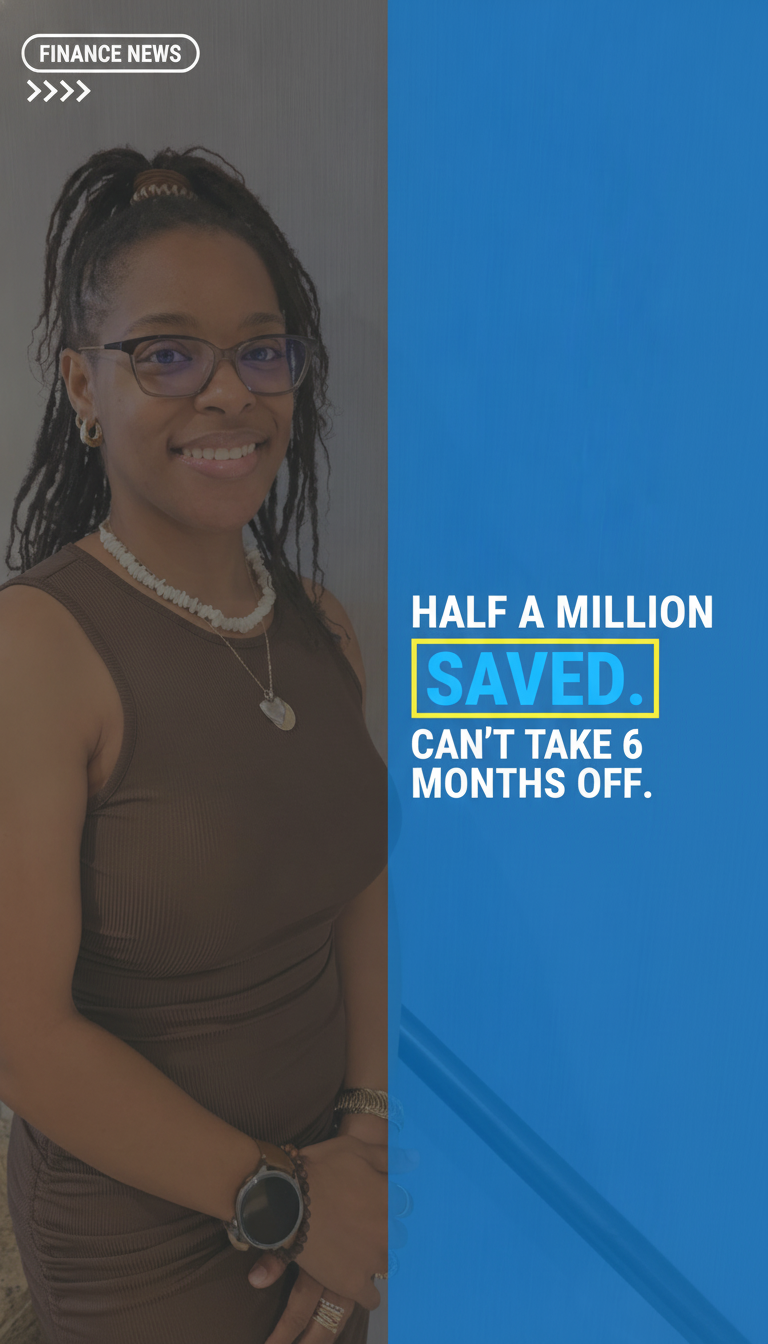
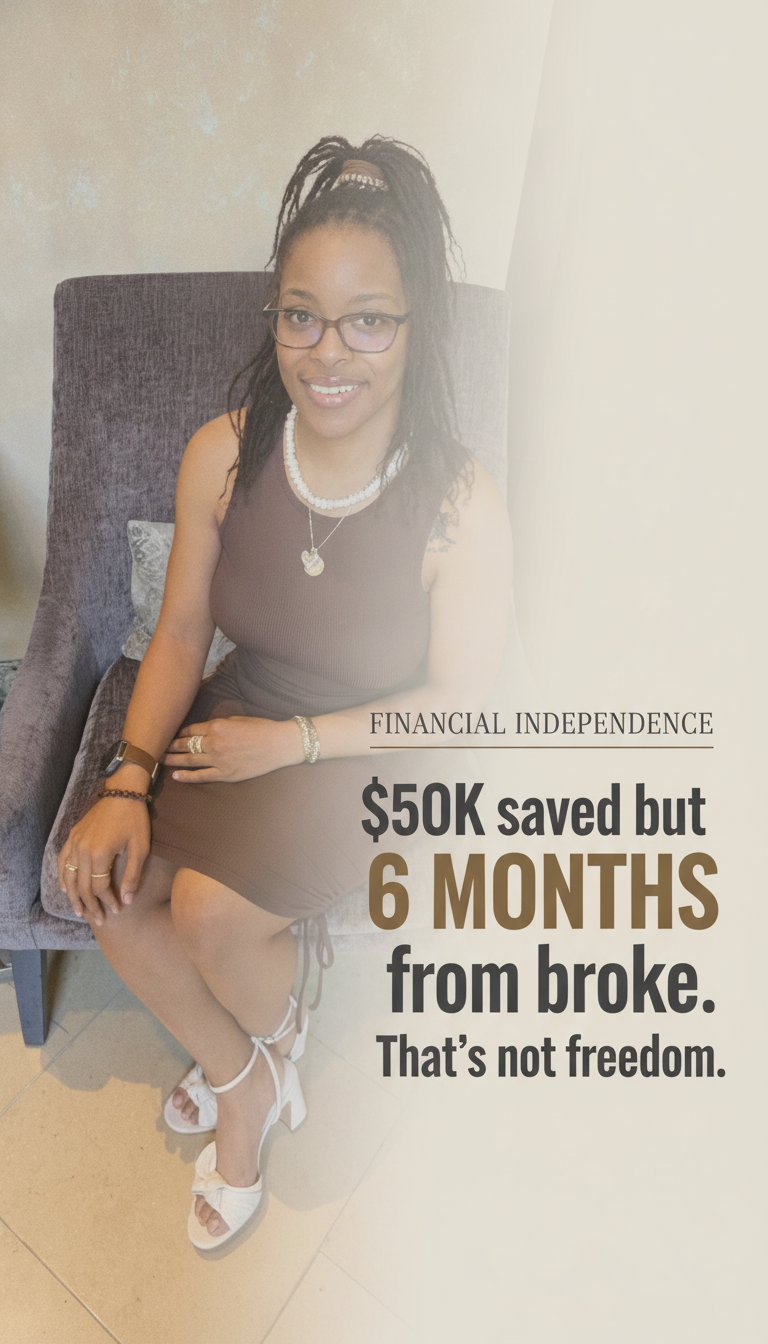
There's a particular kind of tension that lives in the chest of successful professionals who've done everything right. They've climbed the ladder, commanded higher salaries, socked away impressive sums. The retirement accounts are healthy. The emergency fund exists. By every conventional metric, they should feel secure.
Yet when they imagine stopping—truly stepping away from work for six months—something tightens. The mortgage payment flashes through their mind. The private school tuition. The car lease. The lifestyle their family has grown accustomed to. Suddenly, that half-million in the bank feels less like a fortress and more like a sandcastle at high tide.
The Illusion of Financial Security
Most wealth advice focuses obsessively on accumulation. Hit this savings target. Max out that account. Reach seven figures. The implicit promise is that once you accumulate enough, you'll feel free. But freedom and accumulation are not the same thing, and conflating them creates a trap that snares even high earners.
Consider what financial freedom actually means in practical terms: it's the ability to make decisions based on preference rather than necessity. It's saying no to the client who drains you, taking three months to care for an aging parent, or simply pausing to reconsider whether your current path still serves you. These decisions require something more specific than a large account balance. They require what we might call structural freedom—a financial architecture that doesn't collapse the moment you stop feeding it.
The problem is that most people build wealth and lifestyle in lockstep. Every raise brings a corresponding increase in fixed obligations. The bigger house, the better neighborhood, the private schools, the country club—each one perfectly reasonable in isolation, but collectively they create a cost structure that demands continuous high income. You've built a beautiful machine that requires constant fuel. Stop feeding it, and the anxiety begins immediately.
Rich in Savings, Poor in Options
This is the distinction that matters: being rich in savings versus being rich in options. The former is a number. The latter is a structure. You can have $500,000 saved and still be trapped by monthly obligations that require you to earn $15,000 after taxes just to break even. In that scenario, your savings represent a buffer—perhaps a year or two if you're careful—but they don't represent freedom. They represent a countdown timer.
Meanwhile, someone with $200,000 saved but monthly obligations of $4,000 has more actual freedom. They can step away longer. They can take risks. They can say no. The absolute number is smaller, but the optionality is greater. This is what most financial planning misses entirely: the relationship between your assets and your cost structure matters more than either number alone.
Measuring the Gap You Can't See
The reason this trap persists is that most people never measure the right thing. They track net worth, income, and savings rate. All useful numbers, but none of them answer the question that actually matters: how long could you maintain your current life without earning?
This gap—between the life you've built and the runway you've created—determines your real freedom. And for most high earners, that gap is shockingly narrow. They discover this only during a crisis: a job loss, a health scare, a burnout so severe they can't ignore it. Suddenly the question isn't theoretical anymore, and the answer is uncomfortable.
The smarter approach is to see the gap clearly before you need to. To understand not just what you've saved, but what that savings actually buys you in terms of time and choice. To recognize the difference between impressive numbers and genuine optionality. This kind of clarity doesn't come from checking your investment returns or calculating your net worth. It requires a different kind of assessment of both your financial structure and your life design.
Real wealth is built backward from the life you want to live, not forward from the money you've managed to accumulate. It asks what you need to feel genuinely free, then builds the financial architecture to support it—rather than building the biggest possible pile and hoping it eventually feels like enough.
If you've never stopped to measure where you actually stand—not your net worth, but your real optionality—the gap between your wealth and your freedom might be wider than you think. A clear-eyed audit of both your finances and your life design can show you exactly where that gap exists, and more importantly, what it would take to close it. The assessment takes three minutes and requires nothing but honesty.