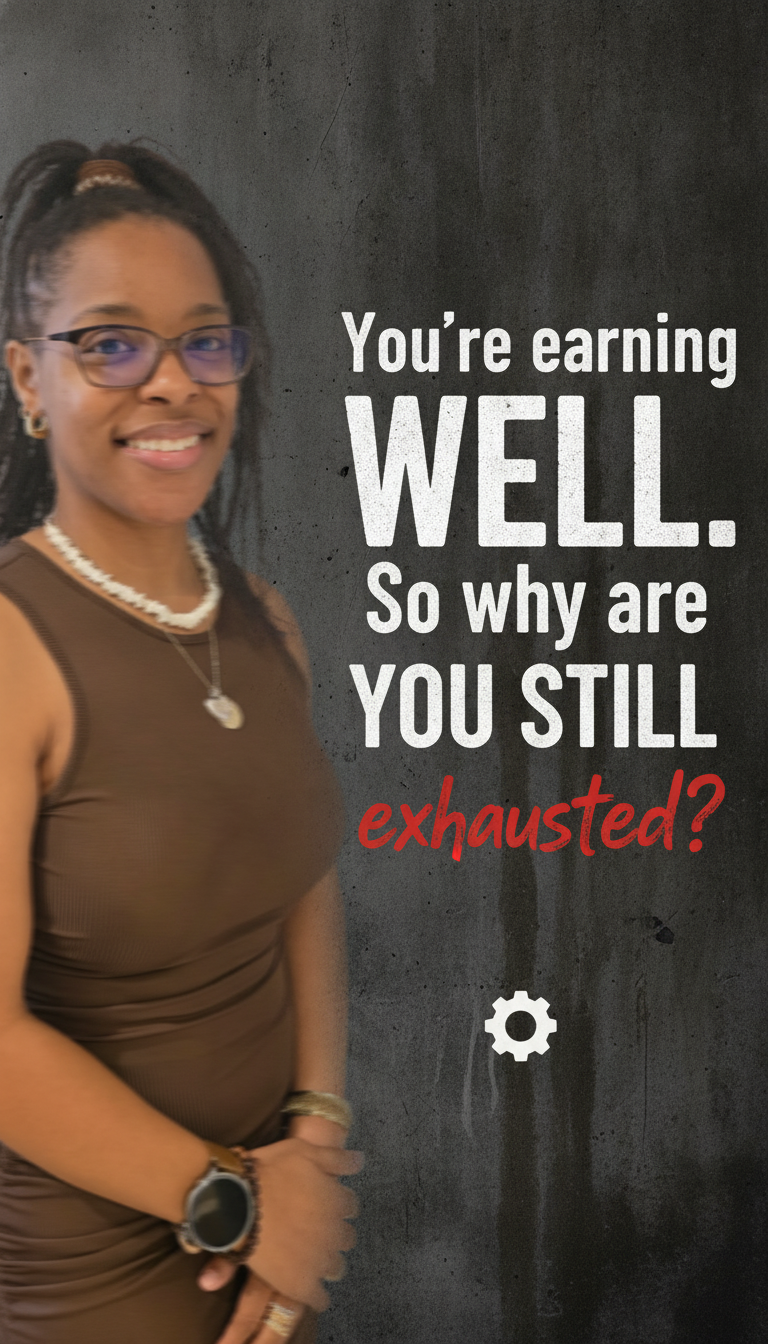
The difference between income and wealth reveals itself slowly, then all at once. You can earn mid-six figures and still find yourself stretched thin, unclear about where the money goes, unsure if you're building anything that lasts. The promotions arrive, the bonuses clear, yet the sense of financial security remains elusive. This isn't a budgeting problem. It's an audit problem.
High earners often operate without the systematic reviews that businesses take for granted. A company audits its books quarterly, assesses strategic alignment annually, and course-corrects before small issues compound into existential threats. Yet individuals—especially those with complex financial lives—frequently go years without asking the hard questions: Is this income turning into actual wealth? Does my calendar reflect my stated priorities? Am I building toward something intentional or just responding to whatever comes next?
The Burnout Tax on High Earners
Saying yes to everything feels productive until your body forces the conversation your calendar wouldn't allow. Burnout among high performers isn't a badge of honor—it's a design flaw. It signals a life structured around reactive decision-making rather than intentional architecture. The partner track, the advisory board seat, the speaking engagement, the portfolio company—each opportunity seems rational in isolation. Collectively, they create a system that extracts more than it sustains.
The professionals who avoid this trap don't possess superhuman discipline. They possess clarity about what they're optimizing for, and they protect that clarity through regular review. They know that energy and attention are finite resources that compound when invested wisely and deplete when fragmented. An overcommitted calendar isn't a sign of importance. It's a sign of absent criteria.
The Cost of Delayed Conversations
The most expensive decisions are often the ones we avoid making. Delaying the conversation about whether your portfolio matches your risk tolerance, whether your spending aligns with your values, whether your career trajectory still serves your evolving priorities—these delays don't preserve optionality. They narrow it. The conversation you postpone at forty becomes significantly more constrained at fifty, when a decade of compounding has either worked for you or against you.
Crisis has a way of forcing clarity, but it's the most expensive form of education available. The forced liquidation during a market downturn because your asset allocation was never intentionally set. The partnership dissolution that reveals you never formalized succession planning. The health scare that makes you realize you've built a life that requires your constant presence to function. These moments provide clarity, but at a steep premium.
Patterns Ignored Become Problems Inherited
Your current financial and life systems are producing exactly the results they're designed to produce. If those results feel misaligned—if you're earning well but not building wealth, if you're busy but not fulfilled, if you're successful by external measures but uncertain about internal ones—the system needs examination, not more effort within it.
The patterns are usually visible before they become problems. The gradual lifestyle inflation that keeps pace with income growth but never allows for wealth accumulation. The professional obligations that crowd out the relationships you claim matter most. The investment approach that's more reactive than strategic, more product-driven than goal-aligned. These patterns don't announce themselves as problems. They simply persist until the gap between your stated values and your revealed priorities becomes uncomfortable enough to address.
The most sophisticated wealth management isn't about exotic investment vehicles or complex tax strategies—though those have their place. It's about the disciplined practice of examining whether your financial life and your actual life are converging or diverging. It's about creating the space to ask whether the path you're on still leads somewhere you want to go.
This kind of examination doesn't happen accidentally. It requires dedicated time, structured questions, and often an external perspective to identify what's become invisible through familiarity. The professionals who maintain alignment over decades don't rely on crisis to prompt review. They build regular auditing into their operating system. If you've been postponing this conversation with yourself, the free Life and Wealth Audit at palymorf.com provides the structured framework to begin. The best time to examine your trajectory is before the market, your health, or your circumstances force the issue.